
Dear CCW Family,
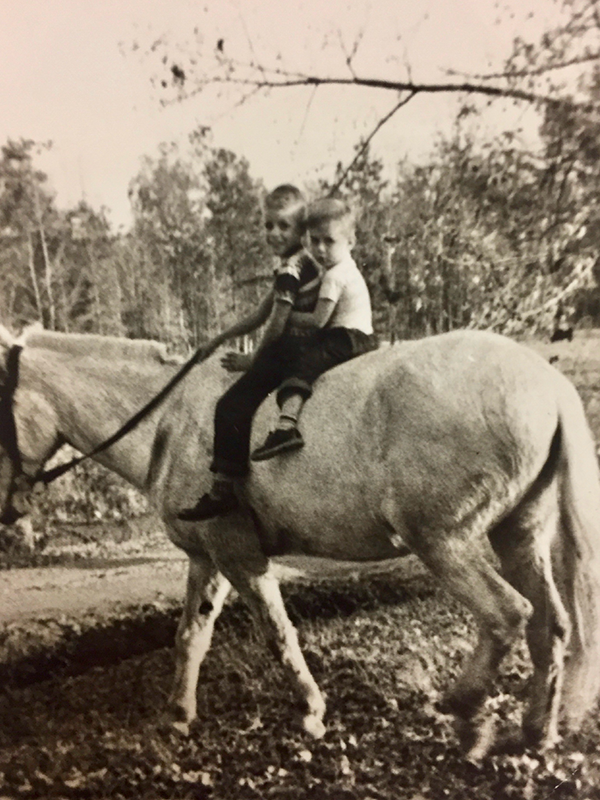 I’m a grandson of a farmer, born in 1870. As a boy, I spent holidays at the farm in southern Arkansas, outside of Warren. I have recollections of my then unmarried aunt putting on her bonnet to work the large garden, picking fresh vegetables for the meals we ate on the porch, and for canning. My grandfather plowed the garden with a large dappled mule named Old Dave. He had a well-worn tractor for the larger fields eventually, and a straw hat. It was all charming to a boy, but hard work for the farmer. For a good while he had ten children and a grandson to feed, and farm hands. Every step was important, but none of them meant much without the first — sowing and planting the seed.
When Jesus, who was in the trades as a carpenter, talked of sowing the seed, he knew it well. Grain farms were in the Jezreel Valley below their home and hill farming was all around him in the Lower Galilee region. He spoke of it knowledgeably. When the farmer sows seed, usually from a bag over his shoulder, he did it by hand. He described it this way:
A sower went out to sow. And as he sowed, some seeds fell along the path, and the birds came and devoured them. Other seeds fell on rocky ground, where they did not have much soil, and immediately they sprang up, since they had no depth of soil, but when the sun rose they were scorched. And since they had no root, they withered away. Other seeds fell among thorns, and the thorns grew up and choked them. Other seeds fell on good soil and produced grain, some a hundredfold, some sixty, some thirty. He who has ears, let him hear. (Matthew 13:3-9)
Nobody likes to waste precious seed, but invariably it went everywhere — the hard path, the rock-filled soil, the thorny ground, and the good dirt where things grow best. There it could produce varying amounts of grain.
Jesus himself became a farmer at 30, and when he engaged in his three-year public ministry, gospel seed went everywhere, usually creating reactions — positive and negative. It was because of Jesus’ labors as a spiritual farmer that I became one, as well. Jesus is still farming, so maybe it would be right to call me a farm worker who ploughs, sows or plants, weeds, and reaps, whatever he needs, for a spiritual harvest. He told his disciples that the harvest was great in that day and they should “pray for workers to go into the harvest.” There are not enough of those, he said (Mt 9:37). We need workers today, in all aspects of the process. He reminded them of the saying, “‘One sows and another reaps.’ I sent you to reap that for which you did not labor. Others have labored, and you have entered into their labor” (John 4:37-38).
Paul was a spiritual farmer for Jesus also, sowing and reaping, all over the Roman world. He had about 40 named farmhands helping him, both men and women. He did other things following up his sowing, like putting together assemblies of new believers, and contributing to the body of “apostolic teachings,” which are still vital to us today (Eph 2:19-22).
Speaking/Friends/Farming
Pam and I recently went on an extended road trip which we dubbed a ministry/friends trip. There were some places where I had been asked to speak, first in Tennessee at Union University’s chapel, into other contiguous states, ending up in a New Jersey Bible Intensive in Lindenwold. Those were such memorable occasions. But just as importantly as those events, we set out to renew old friendships and see some relatives. Some of those friendships go 50 years back. Each has an important story I do not have time to tell here. Conversations with these friends ran deep and were critical to the success of this trip. What a love we have for each of these we were able to see!
Added to this was an intentional effort to sow the seed of the gospel everywhere we went. We were able to do that kind of farmer’s work a few dozen times, all spontaneously. When we stopped at restaurants, or gas stations, or hiking trails, we tried to keep our eyes open to find whomever God might want us to talk with. Some of those experiences are flashing through my mind right now as I write. Sometimes these experiences seemed to be at a critical moment in the listener’s life, and, surprisingly, they sometimes shared with us the crises or searching they were experiencing. As we got back into the van, we prayed for the seed to take root.
There are many motivations for being a farmhand with Jesus. It helps to realize that the person we speak the gospel to is often somebody else’s desperate concern. Behind that person at the welcome desk, or at the register in the convenience store, or walking around the neighborhood with their dog, or having a conversation with you at the coffeeshop, is often the intense intercession of a loved one — sometimes for years. We may be one more necessary link, or even the final link, between those prayers and this person’s new life in Christ. Put yourself in the praying person’s shoes. Think how they would plead with you to go ahead and speak up or offer literature to that young man or woman sitting close by, or that young man on the job site. Sure, it’s hard to do, but if you could hear the pleas of those praying people in the background, you would lay aside your pride or fear and do it anyway. Or, even more compelling is the thought that perhaps no one has ever prayed for this person, or mentioned Jesus’ name to her — ever! You are likely the first and the only one who will ever do so.
Just like the farmer who rises early and heads out to the field, God arranged a morning job for me today as I met with a doctor and his assistant for a checkup. I could not take much of their time, but I handed them each something to read about knowing Jesus, with a sincere couple of sentences. Maybe it fell into good soil, maybe it will sprout soon, or maybe much later, or maybe not at all. Regardless, this is what farmers do.
When he saw the crowds, he had compassion for them, because they were harassed and helpless, like sheep without a shepherd. Then he said to his disciples, “The harvest is plentiful, but the laborers are few; therefore pray earnestly to the Lord of the harvest to send out laborers into his harvest.” (Matthew 9:36-38)
What’s Current with CCW?
In addition to the month long trip described above, our team is busy other places. Marco was just in South Africa, for instance, along with Tate, a member of our church. He’ll share stories about the ministry there sometime soon.
Steve, what’s happening with you?
“I have recently finalized plans for another ministry trip to India in January, plus a Bible intensive and Sunday speaking at a church in Brooklyn, New York, in February. Before that, we would normally travel to Ohio for Christmas, but my youngest daughter (Lilly, 18) just had a significant knee surgery (6 weeks non-weight bearing!), so we’ll be around KC this December. Oh, and my first grandchild (a grandson) was born just a few days ago!”
With Joy,
Jim Elliff, Steve Burchett, and Marco Scouvert